
Quick Answer: There is no single best Christian drug rehab center. The best one is the program whose care matches what your loved one actually needs, which comes down to four things: whether Christian faith is foundational to the program, whether a physician or medical team oversees care, whether licensed clinicians can treat a co-occurring condition, and whether eligible costs can be submitted to insurance.
Families searching for the best Christian rehabs already know they want Christ at the center.
What they are trying to work out, usually late at night and under real pressure, is which program can keep them, their son, daughter or loved one safe.
Christian programs sit at very different points on the treatment continuum.
Some are counseling ministries. Some are year-long discipleship homes. A few are licensed treatment centers with medical oversight.
All of them can be faith-filled. Not all are set up to manage withdrawal, treat a co-occurring condition, or work with your insurance.
Here, we cover what separates one Christian program from another, six programs and who each is built for, and the questions to ask first.
Key Takeaways
- Two Christ-centered programs can be equally biblical and still be built for different people.
- Many discipleship homes and counseling ministries are designed for the stage after withdrawal, not during it.
- Accreditation and state licensure show a program is held to outside standards for safety, staffing, and quality.
- Look at the whole continuum: residential care, extended care, outpatient, community support, and follow-up.
- Ask every program the same seven questions. The answers sort the options faster than any list.
- S2L Recovery helps your family move from crisis to a real plan of care. Call 615.819.4175.
How to Compare Any Christian Recovery Program
Four questions do most of the sorting. Ask them of every program you are considering, including this one.
| Comparison point | Why it matters |
|---|---|
| Christian foundation | Is Christian faith foundational to the program, or supplementary to it? |
| Medical oversight | Is the individual under the ongoing care of a physician or medical team? |
| Licensed clinical care | Can the program address co-occurring mental health concerns through licensed clinicians? |
| Insurance accessibility | Can eligible treatment costs be submitted to commercial health insurance? |
A program that answers no to two of these is not a worse program. It is a different one.
The answer only matters against what your loved one needs right now.
A Note on the Programs in This Article
The organizations below are representative examples of Christian recovery programs S2L respects and may recommend when their services fit what someone needs.
They are not an exhaustive national list, and they are not ranked from best to worst. Similar programs operate all over the country.
They also do not all provide the same type or intensity of service. A program offering fewer medical or clinical services is not a lesser program.
It may be built for a different person, or for a different stage of recovery.
Best, in this article, means the best fit for the individual rather than the longest commitment or the longest list of services.
The Six Christian Drug Centers at a Glance
Here is how the six programs compare on those four points, and who each one is designed for.
| Program | Christian foundation | Medical oversight | Licensed clinical care | Insurance | Designed for |
|---|---|---|---|---|---|
| S2L Recovery | Foundational | Physician-led medical team. Detox on site when needed | Licensed clinicians treat co-occurring conditions | Many commercial plans | Men and women who need medical oversight and licensed therapy in a Christ-centered residential setting |
| Renew Clinic | Foundational | Outpatient. No on-site detox described | Individual and group therapy, plus biblical counseling | Ask directly | Someone stable at home who wants outpatient treatment and long aftercare |
| Miracle Lake | Foundational | No detox on site | Group, recreational, and individual counseling | Self-pay, tuition published | Men wanting long-term discipleship residential care and a path back to work |
| Renewed Life Ministries Outreach | Foundational | Not set up for medical detox | Counseling from a pastoral counselor | Self-pay. Fees published | Men needing a year of structure after detox or incarceration |
| Be The Bush Recovery Ministries | Foundational | Ask directly | Spiritual counseling and biblical education | Self-pay, with scholarships | Men committing to a discipleship-first year |
| Branches | Foundational | Psychiatric medication management | Counseling and mental health care | Some commercial plans, plus income-based rates | Families needing Christian counseling around or after treatment |
All six treat Christian faith as foundational rather than supplementary. The differences show up in the other three columns.
The order is not a ranking. Every entry comes from what each organization publishes about itself, checked against their own websites in August 2026.
Where a program does not publish an answer, ask them directly.
What Makes a Christian Drug Rehab Center Different
A Christian drug rehab center treats addiction as a whole-person problem: physical, mental, relational, and spiritual.
The spiritual part is not an evening activity bolted onto a clinical schedule. It is the foundation the rest of the care is built on.
In practice that means biblical teaching, pastoral care, worship, and a community pursuing the same thing.
Families choose it because secular treatment often addresses the behavior without ever touching the identity underneath it.
That conviction shapes how the day is structured inside a Christian rehab, from the counseling to the teaching to the hours in between.
What varies most between Christian programs is how much clinical and medical care sits alongside the faith.
At S2L Recovery, the Christ-centered approach runs through licensed therapy, pastoral teaching, and medical oversight together rather than in separate tracks.
The Question That Sorts Christian Rehab Centers: Level of Care
Addiction treatment is organized along a continuum, from weekly outpatient counseling up to medically managed inpatient care.
The American Society of Addiction Medicine maintains the framework most providers, states, and insurers use. Its level of care criteria is worth understanding first.
The criteria exist to match a person to a level of care, not to rank one level above another.
A higher level of care is not a better program. It is a more intensive one, and it is the right choice only when the situation calls for it.
Simplified, the continuum looks like this.
Outpatient counseling. A few hours a week. The person lives at home and keeps working.
Intensive outpatient. Roughly nine to nineteen hours a week of group and individual therapy. Still living at home.
Residential treatment. The person lives at the facility with structure and support around the clock.
Medically monitored or medically managed care. Residential care with medical staffing for withdrawal and conditions needing active management.
A discipleship home and a licensed residential treatment center can both be residential and still sit at different points on this continuum.
The difference is whether medical and licensed therapeutic services are available on site.
How We Compared These Programs
Every program here was looked at against the same five things:
- Christian foundation. Whether biblical teaching is foundational to the program or an addition to it.
- Medical oversight. Whether the person is under the ongoing care of a physician or medical team, and whether withdrawal can be managed on site.
- Licensed clinical care. Whether licensed clinicians can treat co-occurring mental health conditions.
- Insurance accessibility. Whether eligible treatment costs can be submitted to commercial health insurance.
- Setting, length, and who it is built for. Where the program runs, how long it lasts, and the point in recovery where it does its best work.
We did not score these programs against one another. The same five points are applied to each so a family can see which model fits.
The seven questions later in this article go further, into staffing and clinical detail that most programs only answer on a phone call.
Every description here comes from what each organization publishes about itself, checked against their own websites in August 2026.
6 Best Christian Drug Rehab Centers to Consider and Who Each One Is Designed For
Each description comes from what the organization publishes about itself. The order below is not a ranking.
S2L Recovery
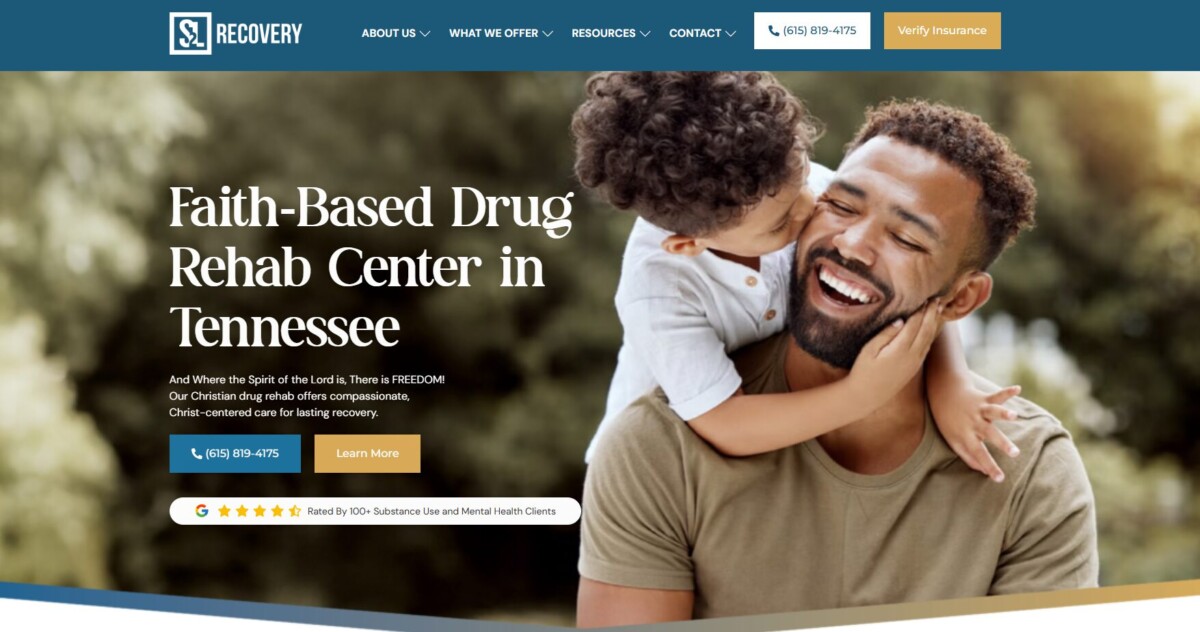
Setting and length: Residential treatment for men and women at separate Tennessee locations. A 42-day residential phase, with an optional 42-day extended-care phase based on clinical recommendations, program eligibility, and availability.
Christian foundation: Foundational. Biblical discipleship, pastoral care, worship, and identity in Christ run through the program.
Medical oversight: Physician-led medical team, with medically supervised detox on site when the medical team determines it is needed.
Licensed clinical care: Licensed clinicians treat co-occurring mental health conditions inside the same program.
Insurance accessibility: Works with most major commercial insurance providers. Benefits verified before admission.
S2L Recovery combines medically supervised withdrawal management when needed, physician-led medical care, licensed clinical services, residential treatment, family involvement, and biblical discipleship within a coordinated program.
We are accredited by The Joint Commission, licensed by the State of Tennessee, and listed with SAMHSA.
The program is held to national standards for safety, staffing, documentation, and quality of care.
We provide residential addiction treatment for men and women, with medically supervised detox on site when the medical team determines it is needed.
Because detox happens on site, someone can move from withdrawal into residential care without being passed between organizations at the moment they need stability most.
Many Christian programs are not set up for that step and ask families to arrange it elsewhere first. Worth knowing in advance rather than at admission.
Our program includes:
- Medically supervised detox when clinically needed
- A 42-day residential phase
- An optional 42-day extended-care phase based on clinical recommendations, program eligibility, and availability
- Licensed therapy
- Treatment for co-occurring conditions
- Biblical curriculum taught by full-time ordained pastors
- Family involvement
- Separate men’s and women’s programs at separate locations
- An application-based six-month internship opportunity for eligible alumni
We work with most major commercial insurance providers, including Aetna, Blue Cross Blue Shield, Cigna, United Healthcare, UMR, Prime Health, and other major insurance providers.
TRICARE East is accepted, and private pay is available.
Coverage varies by policy, medical necessity, authorization requirements, and individual benefits, so our admissions team verifies benefits before admission.
S2L also has a 1:1 staff-to-client ratio, a 60% one-year sobriety rate among people who complete the program, and 20-plus years serving families.
If your family is trying to decide what level of care your loved one needs, call 615.819.4175 today.
Our team can help you talk through the situation, verify insurance, confirm availability, and understand whether S2L is the right next step.
Designed for: Men and women who need medical oversight, licensed therapy, treatment for co-occurring conditions, and a Christ-centered residential setting in one place.
Renew Clinic
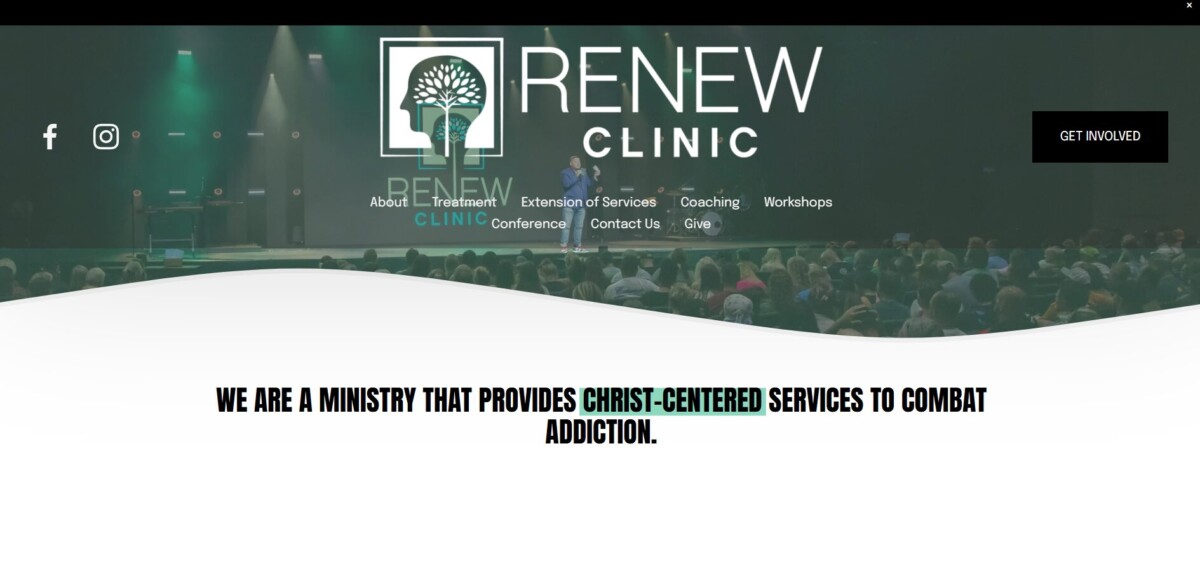
Setting and length: Christ-centered intensive outpatient in Knoxville, Tennessee. At least twelve weeks, with recovery coaching continuing for up to a year after graduation.
Christian foundation: Foundational. A Christ-centered outpatient program, with biblical counseling offered on site.
Medical oversight: Outpatient setting with a medical director available for consultations. No on-site detox is described, so withdrawal would need managing elsewhere.
Licensed clinical care: Three group therapy nights a week plus weekly individual therapy.
Insurance accessibility: Not published on their site. Ask them directly.
Renew Clinic also runs family support meetings on Wednesday evenings, and recovery coaching that continues after the program ends.
Because it is outpatient, the person lives at home throughout, which works when home is a safe place to recover from.
Designed for: Someone who can remain safely at home and wants Christ-centered outpatient treatment with a long aftercare relationship.
Miracle Lake

Setting and length: Residential Christian training center for men in Etowah, Tennessee. Twelve-week first phase, with later phases based on the student’s progress.
Christian foundation: Foundational. Biblical classes sit at the center of the daily schedule.
Medical oversight: No detox on site, so men need withdrawal behind them before they arrive.
Licensed clinical care: Group therapy, recreational therapy, and individual counseling.
Insurance accessibility: Insurance is not mentioned on their site. Tuition is published there instead, with a discount for paying in full on arrival.
A third transitional living phase at a separate location adds work readiness, money management, and continued counseling.
Designed for: Men who want a long, discipleship-led residential program with a built-in path back into work and independent living.
Renewed Life Ministries Outreach
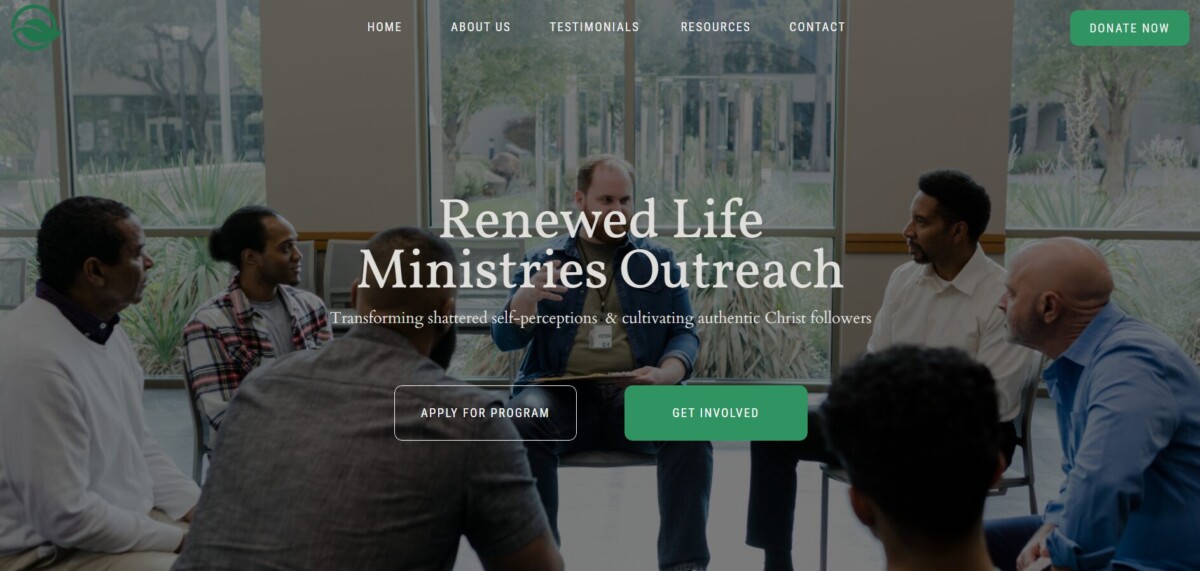
Setting and length: One-year residential restoration and re-entry program for men aged 19 and over in Rutherford County, Tennessee. Founded in 1995.
Christian foundation: Foundational. Built around discipleship, community, and personal responsibility.
Medical oversight: Renewed Life states it is not set up for medical detox.
Licensed clinical care: Individual counseling from a pastoral counselor.
Insurance accessibility: Renewed Life states it does not accept insurance. An entry fee and a weekly program fee are published, paid from students’ employment earnings.
Renewed Life accepts men who have completed at least a 30-day detox or have spent time incarcerated.
Designed for: Men who have come through detox or incarceration and need a full year of structure, brotherhood, and support re-entering work and family life.
Be The Bush Recovery Ministries
Setting and length: Residential faith-based discipleship for men in Manchester, Tennessee, serving men from across the country. An induction phase within a year-long process.
Christian foundation: Foundational. Modeled on the Teen Challenge approach, with biblical education at the center.
Medical oversight: Not published on their site. Ask them directly.
Licensed clinical care: Spiritual counseling rather than licensed clinical treatment.
Insurance accessibility: Insurance is not mentioned on their site. An entry fee is published, with a scholarship program for those who cannot pay.
It functions as an induction center for the first several months of a year-long discipleship process, with work projects and community outreach.
Designed for: Men who want a discipleship-first residential program and are ready to commit to a year.
Branches
Setting and length: Outpatient counseling and mental health care across offices in Murfreesboro, Nashville, and Mt. Juliet. Ongoing by appointment, plus five-day intensives.
Christian foundation: Foundational. A Christ-centered non-profit, founded in 2007.
Medical oversight: Psychiatric medication management is offered. It is not a residential addiction program.
Licensed clinical care: Counseling, support groups, life coaching, and mental health care.
Insurance accessibility: Most commercial plans are accepted for medication management, and some plans for counseling. Income-based reduced fees are also available.
Branches is a strong option for the counseling that surrounds a treatment program rather than a replacement for one.
Designed for: Individuals and families who need Christian counseling and mental health care, including alongside or after a treatment program.
What Makes S2L Recovery Distinct
While there are many options available, at S2L Recovery, we take a unique approach to care that blends faith with clinical practice.
Christ-Centered Ministry and Clinical Care
S2L Recovery occupies a relatively uncommon place among Christian drug rehab centers.
Our program is genuinely ministry-minded and centered on helping men and women grow in their relationship with Jesus Christ.
It also provides the medical and licensed clinical care often needed when substance dependence and mental health struggles occur together.
Christian teaching is not an optional activity added to an otherwise secular treatment model.
Biblical discipleship, pastoral care, worship, Christian community, and identity in Christ are woven throughout the program.
Integrated Medical and Therapeutic Support
At the same time, every individual admitted to S2L is placed under the care of S2L’s physician-led medical team.
Having an attending physician involved throughout treatment provides meaningful continuity of care.
When medically appropriate, our physician can also complete supporting documentation for needs such as FMLA leave or short-term disability.
That can matter for working professionals who need treatment but are concerned about protecting their employment or income while they are away.
S2L’s clinical team includes licensed clinicians who help address the co-occurring mental health concerns that frequently accompany substance use.
Medical care, licensed clinical treatment, family involvement, and biblical discipleship work together rather than as disconnected parts.
Family therapy is part of that work, so the relationships around the addiction get repaired rather than left until afterward.
Insurance Accessibility and Quality of Care
Because S2L provides licensed and accredited treatment with medical and clinical oversight, we can work with many commercial health insurance plans.
Coverage varies by policy, medical necessity, authorization requirements, and individual benefits.
It can make Christian treatment with full medical and clinical care reachable for families who might not otherwise afford it.
Some Christian recovery programs provide meaningful discipleship, accountability, and long-term structure but are not equipped to provide physician-led medical care or licensed clinical treatment.
Some licensed treatment centers provide substantial medical and clinical services, but Christian teaching may be secondary or optional.
S2L brings these elements together in one intentionally Christ-centered program.
This combination is what makes S2L unusual: families do not have to choose between serious Christian ministry and professional medical care.
Our Proven Approach to Healing
S2L is also one of the non-12-step rehab programs, so recovery here is not built on the twelve steps.
We have a 60% one-year sobriety rate among people who complete our program, a 1:1 staff to client ratio, and 20-plus years serving families.
At S2L Recovery, we believe in restoring the whole person through God’s grace. That belief shapes the schedule, the teaching, and how we talk to families.
We are confident of this, that he who began a good work in you will carry it on to completion until the day of Christ Jesus (Philippians 1:6).
That work in your family is not finished, and you do not have to carry it alone.
Call 615.819.4175 to talk with someone today, or reach our team here.
What Level of Care Does Your Loved One Actually Need
Start with safety, not with philosophy. A few signs point toward a program with medical oversight rather than an outpatient or discipleship setting.
- Physical dependence. The person feels sick, shaky, or anxious when a dose is late or missed.
- Alcohol, benzodiazepines, or opioids. Withdrawal from these can require medical management, and stopping without it can be dangerous.
- A co-occurring diagnosis. Depression, anxiety, PTSD, or bipolar disorder alongside the substance use.
- Failed attempts at less structure. Outpatient or short programs that did not hold.
- An unsafe home environment. The place they would return to every evening is where the using happened.
If any of these are true, look for a program offering medically supervised detox that steps directly into residential care without a handoff.
Where a mental health condition is part of the picture, ask specifically about treatment for co-occurring conditions rather than assuming it is covered.
If your loved one is talking about suicide or is in immediate danger, call or text 988 for the Suicide and Crisis Lifeline. Call 911 for a medical emergency.
Seven Questions to Ask Before You Commit
Ask every program the same questions and write down the answers. The differences will be obvious within two calls.
- Is the program accredited, and by whom? Ask specifically about Joint Commission accreditation, the national standard for behavioral health organizations.
- Is it licensed by the state, and listed with SAMHSA?
- Can the program manage withdrawal on site, or does it require detox somewhere else first?
- Who provides therapy, and are they licensed?
- How are co-occurring mental health conditions handled?
- How long is the program, and what happens on the day it ends?
- Does the program work with our insurance, and what does the family pay?
None of these questions are hostile. Good programs answer them plainly, and hesitation on any of them is worth weighing before you commit.
How Long Should Christian Rehab Last
Length is one of the most misunderstood parts of this decision.
Current ASAM guidance rejects a one-size-fits-all timeline.
It calls for a length of stay that responds to the person’s progress and changing needs rather than a predetermined number of days.
Two people with the same substance and the same diagnosis can need very different amounts of time.
What the research does support is that recovery support should extend beyond one brief, isolated episode of care.
In NIDA’s Principles of Drug Addiction Treatment, the National Institute on Drug Abuse reports that most individuals need at least three months in treatment to significantly reduce or stop their drug use. The best outcomes occur with longer durations of treatment.
So the useful question is what the whole continuum looks like: residential care, extended care, outpatient treatment, community support, and follow-up after the program ends.
A twelve-week program with a year of structured aftercare and a year-long residential program are two shapes of the same commitment.
Neither one is automatically the stronger choice.
At S2L, the residential phase is 42 days, with an optional second 42-day phase based on clinical recommendations, program eligibility, and availability.
An application-based six-month internship is open to eligible alumni after that, and our alumni community continues past it.
Measured as a continuum rather than a single residential stay, that runs well past three months, which is how the research frames it.
Ask any program you are considering what happens on the day their program ends. That answer tells you more than the number of days does.
Paying for Christian Rehab
Cost is where many families stall, and it is worth separating two different funding models.
Ministry-funded discipleship programs are often supported by donations and church partners, which keeps costs low, and they usually do not bill insurance.
Licensed treatment centers work with insurance because the care they provide is billable medical and behavioral health treatment.
Neither model is the better one. They are funded differently because they deliver different services.
S2L Recovery works with most major commercial insurance providers, including Aetna, Blue Cross Blue Shield, Cigna, United Healthcare, UMR, Prime Health, and other major insurance providers.
TRICARE East is accepted, and private pay is available.
Coverage varies by policy, medical necessity, and individual benefits, so our team verifies benefits before admission and you know the number in advance.
Start with a confidential insurance check. Or contact us today at 615.819.4175.
Frequently Asked Questions About Christian Drug Rehab Centers
What is the best Christian drug rehab center?
There is no single best one. The best fit is the program whose care matches the person’s needs: whether Christian faith is foundational, whether a medical team oversees care, whether licensed clinicians treat co-occurring conditions, and whether your insurance can be used.
How much does Christian rehab cost?
Cost depends on the level of care and how the program is funded. Ministry-run discipleship homes are often donation supported and charge very little. Licensed treatment centers bill insurance, so what a family pays depends on the plan. Ask for a verified number first.
Are there free Christian rehab centers?
Yes. Many discipleship ministries run on donations and church partnerships and charge little or nothing. Most do not provide medical detox or licensed therapy, so they suit someone already past withdrawal rather than someone who needs medical care first.
Does insurance cover Christian drug rehab?
Licensed treatment centers generally work with insurance. S2L Recovery works with most major commercial insurance providers, including Aetna, Blue Cross Blue Shield, Cigna, United Healthcare, UMR, Prime Health, and other major insurance providers, along with TRICARE East.
Does a Christian rehab center provide medical detox?
Many do not, and refer out instead. S2L Recovery provides medically supervised detox when our medical team determines it is needed, moving straight into residential care rather than asking the family to arrange it elsewhere first.
Can Christian rehab treat depression or anxiety alongside addiction?
At S2L Recovery, yes. Depression, anxiety, PTSD, and bipolar disorder are treated inside the same program by the same team. Programs without licensed clinicians on staff refer this to a separate provider, so ask before you commit.
What is the difference between Christian rehab and a Christian discipleship program?
A Christian rehab center provides licensed treatment, often with medical oversight, alongside biblical teaching. A discipleship program focuses on spiritual formation and structured community living, usually without medical or licensed therapeutic services.
Do you have to be a Christian to attend a Christian rehab center?
At S2L Recovery, no. We welcome people of every faith background, and many arrive looking for something they did not find in secular treatment.
Do I have to live near a Christian rehab center to attend?
No. Residential programs draw from across the country, and most families S2L Recovery serves come from out of state. We arrange pickup from Nashville International Airport, so distance is rarely the obstacle it first looks like.
How long should a Christian rehab program last?
There is no set length. ASAM guidance calls for a timeline that responds to the person’s progress rather than a fixed number of days. Look at the whole continuum: residential care, extended care, outpatient, community support, and follow-up.
Where is S2L Recovery located?
S2L Recovery serves men at 290 Mullican Road, McMinnville, TN 37110, and women at 3180 Hill Creek Road, Woodbury, TN 37190. Both programs are open and accept clients from across the country.
How do I get help today?
Call S2L Recovery at 615.819.4175 for a confidential conversation about your situation, insurance, and next steps. Benefits are verified before admission, so you have a number before you commit to anything.